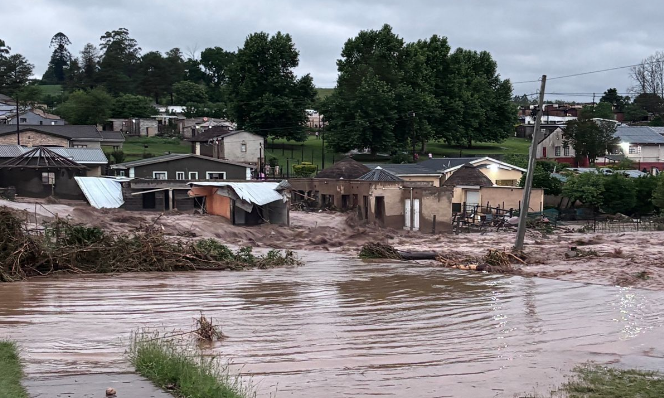

As Christians, we confess that creation is not a distant idea; it is the soil that holds our homes, the rivers that sustain our lives, the climate that shapes our safety. When creation suffers, God’s people suffer, the same way that communities in uMshwathi Local Municipality in KwaZulu Natal, South Africa have suffered from last night, after heavy rains struck them - leaving families displaced and grieving. And when the most vulnerable carry the heaviest burden, the church is called to respond with clarity, compassion, and courage.
The floods in uMshwathi remind us of a painful reality: extreme weather is becoming more frequent and more devastating. This is what climate loss and damage looks like in real time, not in reports, not in global negotiations, but in the lives of ordinary families who have already lost too much.
As we are called to bear one another’s burdens (Galatians 6:2), this moment asks us a difficult but necessary question: what does it mean to be a church of justice in a changing climate? We cannot simply rebuild structures; we must rebuild systems that protect life. We cannot only comfort those affected; we must confront the conditions that deepen their vulnerability. And we cannot treat climate disasters as isolated events; they are signs that creation is crying out.
We mourn with those who have lost loved ones. We pray with those who have been displaced. And we stand with communities demanding accountability, climate adaptation, and justice.
A Prayer for uMshwathi:
God of mercy, God of creation,
Hold the families who have lost homes and loved ones.
Strengthen those responding on the ground.
Guide leaders to act with justice and compassion.
And awaken in us a renewed commitment
to protect your earth and your people.
Amen.