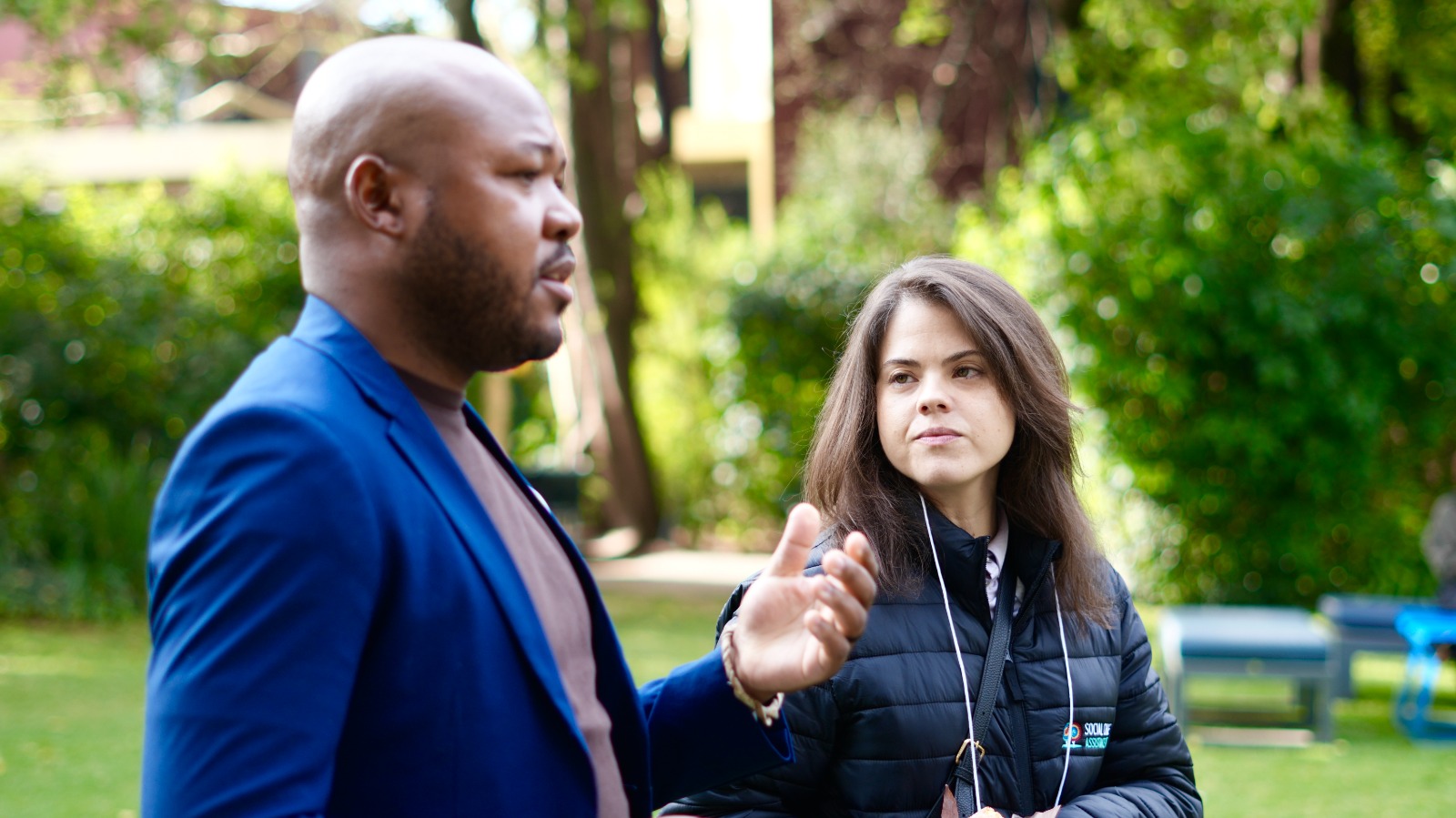

This week, I was privileged to be part of a collaborative learning and strategy space that brought together civil society organisations, community leaders, activists, and development practitioners to reflect on community participation in South Africa's Just Energy Transition (JET).
The workshop explored the barriers that limit meaningful participation, examined what stronger community influence in decision-making could look like over the next three to five years, and identified practical approaches for strengthening local organising, accountability, and collective action. At its heart, the workshop challenged participants to think about how communities can move from being consulted on development and energy decisions to becoming active agents in shaping them.
Representing the Democracy Works Foundation, I had the opportunity to engage with participants from different backgrounds, all of whom brought valuable perspectives on what meaningful participation looks like and what continues to stand in its way, in the context of the Just Energy Transition (JET) in South Africa.
One of my biggest takeaways from the workshop is that communities are not lacking interest or willingness to participate. The challenge is often that people do not know where to participate, how to participate, or whether their participation will make a difference.
Throughout our discussions, colleagues repeatedly highlighted that many of the formal spaces designed for public participation remain inaccessible to ordinary citizens. Structures such as Integrated Development Plans (IDPs), ward committees, municipal forums, climate change forums, and school governing bodies are intended to create opportunities for public involvement. Yet many people are unfamiliar with these processes, while others find them highly technical, poorly communicated, or difficult to navigate.
This made me reflect on a question we often overlook: How can we expect communities to influence decisions if they have not been supported to understand the systems where those decisions are made?
Another important lesson for me was the need to rethink how we communicate the Just Transition. In policy spaces, we often speak about climate targets, renewable energy, decarbonisation, and transition pathways. While these conversations are important, they can sometimes feel distant from the realities that communities face every day.
For many people, the Just Transition is not first and foremost about energy policy. It is about whether there will be jobs, whether water services will improve, whether communities will benefit from development projects, whether young people will have opportunities, and whether local voices will be heard.
The workshop reminded me that if we want communities to engage with the Just Transition, we must connect these discussions to the issues people experience in their daily lives.
I was also encouraged by the recognition of the many forms of community organising that already exist. Too often, development practitioners focus on creating new structures rather than strengthening those that communities already trust and use.
Colleagues envisioned communities that can confidently articulate their priorities within the JET. Communities that are organised around shared goals and able to engage decision-makers with clarity and purpose. Communities whose priorities are reflected in municipal planning processes and whose voices continue to shape development long after consultations have ended.
This vision resonated strongly with me because it shifts participation from being a procedural exercise to becoming a mechanism for accountability and transformation.
As I leave this workshop, I do so with a deeper appreciation of the work ahead. Building inclusive governance and advancing a JET cannot be achieved through policies alone. It requires organised communities, informed citizens, responsive institutions, and meaningful opportunities for participation.
My greatest lesson from this experience is simple: communities already have the knowledge, ideas, and commitment needed to shape their own futures. Our responsibility is to help create the conditions where those voices can be heard, respected, and translated into action.
That is what building power from the ground up truly means.